Anthropology of "Dạ"
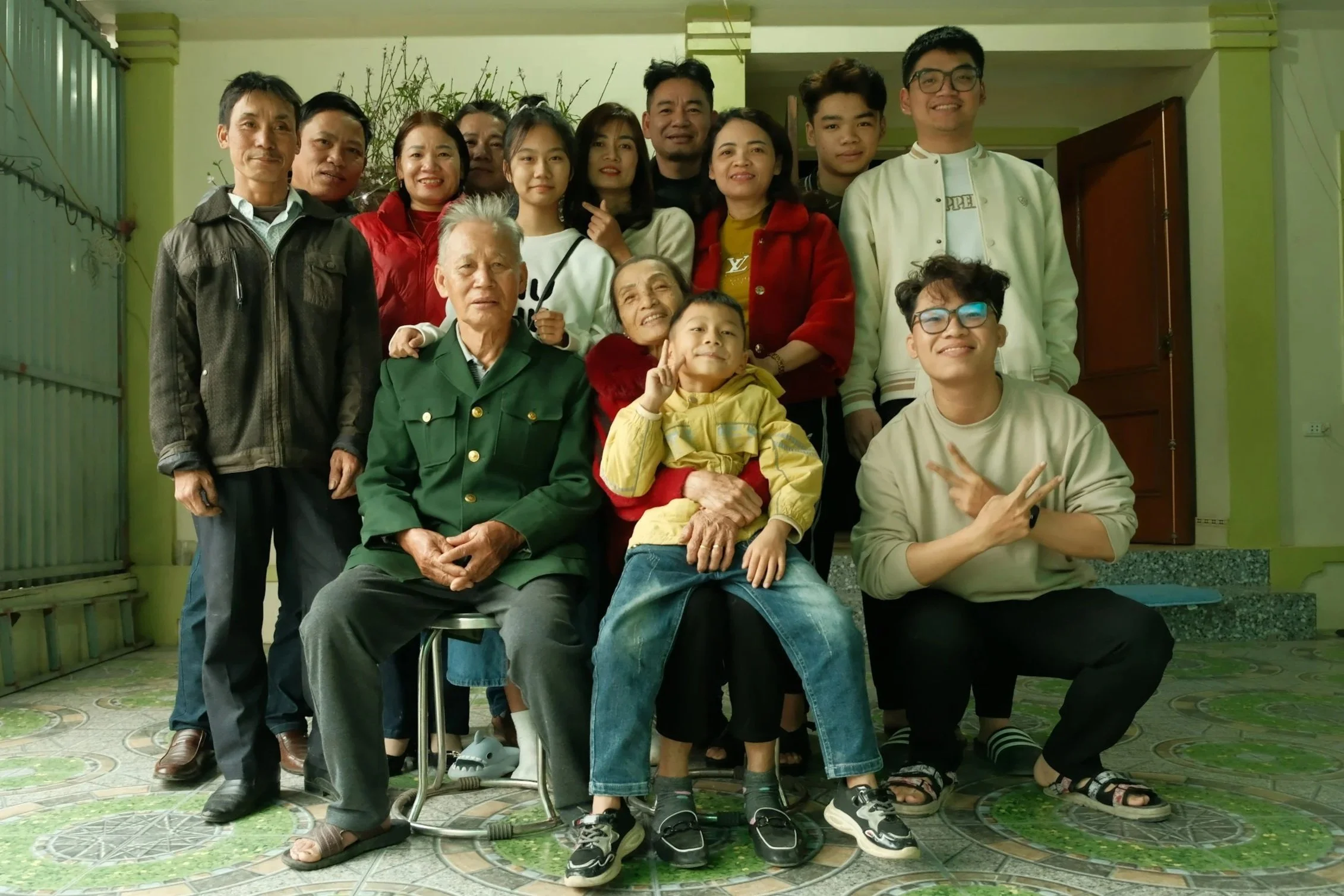
How One Syllable Reveals a Vietnamese Worldview
By Third Culture Vietnam
If you grew up in a Vietnamese household, chances are you learned the word dạ long before you understood its significance.
A parent calls your name.
"Dạ."
A grandparent asks a question.
"Dạ."
An elder greets you.
"Dạ."
For many Vietnamese people, it is one of the first words we learn and one of the last habits we forget. Yet despite its ubiquity, dạ is remarkably difficult to translate.
The closest English equivalent is often given as "yes." But this translation captures only the surface meaning. Anthropologically, dạ is not merely an affirmation. It is a social act.
It acknowledges a relationship.
Language as Social Positioning
One of the defining features of Vietnamese communication is that language constantly situates individuals within a social hierarchy. Unlike English, where pronouns such as "I" and "you" remain relatively stable, Vietnamese requires speakers to continuously identify their relationship to the person they are addressing.
Are they older or younger?
A family member or a stranger?
A teacher, colleague, parent, or friend?
Linguistic anthropologist Hy V. Luong argues that Vietnamese systems of person reference require speakers to locate themselves within a network of social relationships every time they speak (Luong 1990).
In this context, dạ functions as more than a response. It signals awareness of social position and acknowledges the relationship before addressing the content of the conversation.
Before information is exchanged, respect is established.
Respect Made Audible
The widespread use of dạ reflects broader values that have historically shaped Vietnamese society, particularly the influence of Confucian ethics.
Within Confucian traditions, social harmony depends upon individuals understanding and fulfilling their roles within the family and community. Respect for elders, known in Vietnamese as hiếu (filial piety), occupies a central place within this moral framework.
Speech therefore becomes more than communication. It becomes a visible expression of moral conduct.
The use of dạ demonstrates attentiveness, humility, and recognition of social obligations. In many households, children are taught not only what to say, but how to say it.
Respect is not simply taught.
It is practiced.
The Anthropology of Absence
Anthropologists often learn as much from what is missing as from what is present.
In many Vietnamese families, responding without dạ may be interpreted as abrupt, dismissive, or disrespectful, even if no disrespect is intended.
This reveals an important anthropological insight: language carries social meaning beyond literal definition.
A single omitted word can alter the emotional tone of an interaction because the word itself functions as a marker of relational awareness.
The significance of dạ lies not in its dictionary definition, but in its social function.
Dạ Across the Diaspora
For many members of the Vietnamese diaspora, dạ occupies a unique space between languages.
English offers no direct equivalent.
"Yes" communicates agreement.
Dạ communicates relationship.
As subsequent generations grow up navigating multiple languages and cultural frameworks, words like dạ often become difficult to explain yet emotionally resonant. Some continue using it at home while speaking English elsewhere. Others may stop using it altogether while still recognizing the feeling it conveys.
In these moments, language becomes more than vocabulary.
It becomes cultural memory.
The persistence of words like dạ illustrates how traditions often survive not through grand ceremonies, but through everyday habits repeated across generations.
More Than a Word
Anthropology reminds us that culture is often embedded in the smallest details of daily life.
A shared meal.
An ancestor altar.
A family proverb.
A form of address.
Or a single syllable spoken almost without thinking.
To an outsider, dạ may sound like a simple response.
To many Vietnamese families, it communicates something far more complex: respect, belonging, hierarchy, care, and an understanding that every conversation begins within a relationship.
Sometimes an entire worldview can be found in a single word.
Sometimes that word is dạ.
Reflection
Is there a Vietnamese word or phrase that you understand emotionally, but find difficult to translate into English?
We'd love to hear your thoughts.
References
Luong, Hy V. 1990. Discursive Practices and Linguistic Meanings: The Vietnamese System of Person Reference. Amsterdam: John Benjamins Publishing.
Luong, Hy V. 2010. Tradition, Revolution, and Market Economy in a North Vietnamese Village, 1925–2006. Honolulu: University of Hawai‘i Press.
Marr, David G. 1981. Vietnamese Tradition on Trial, 1920–1945. Berkeley: University of California Press.
Taylor, Philip. 2007. "Modernity and Re-Enchantment: Religion in Post-Revolutionary Vietnam." Lanham, MD: Lexington Books.
Wierzbicka, Anna. 2003. Cross-Cultural Pragmatics: The Semantics of Human Interaction. Berlin: Mouton de Gruyter.