The Art of Mặt Nạ Giấy Bồi
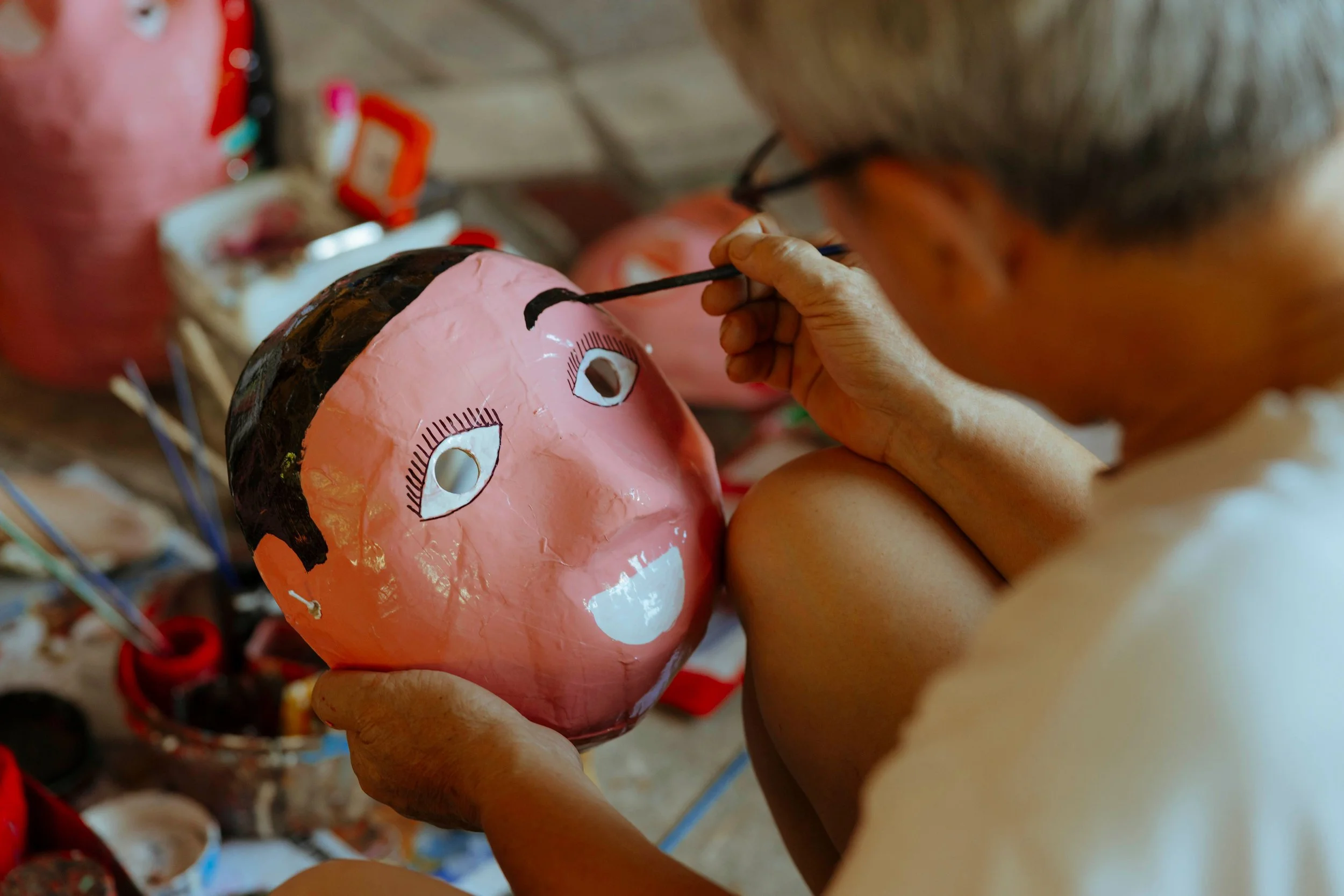
Feature photography by Hong Son.
The Craft, History, and Childhood Memories Behind Vietnam's Traditional Paper Masks
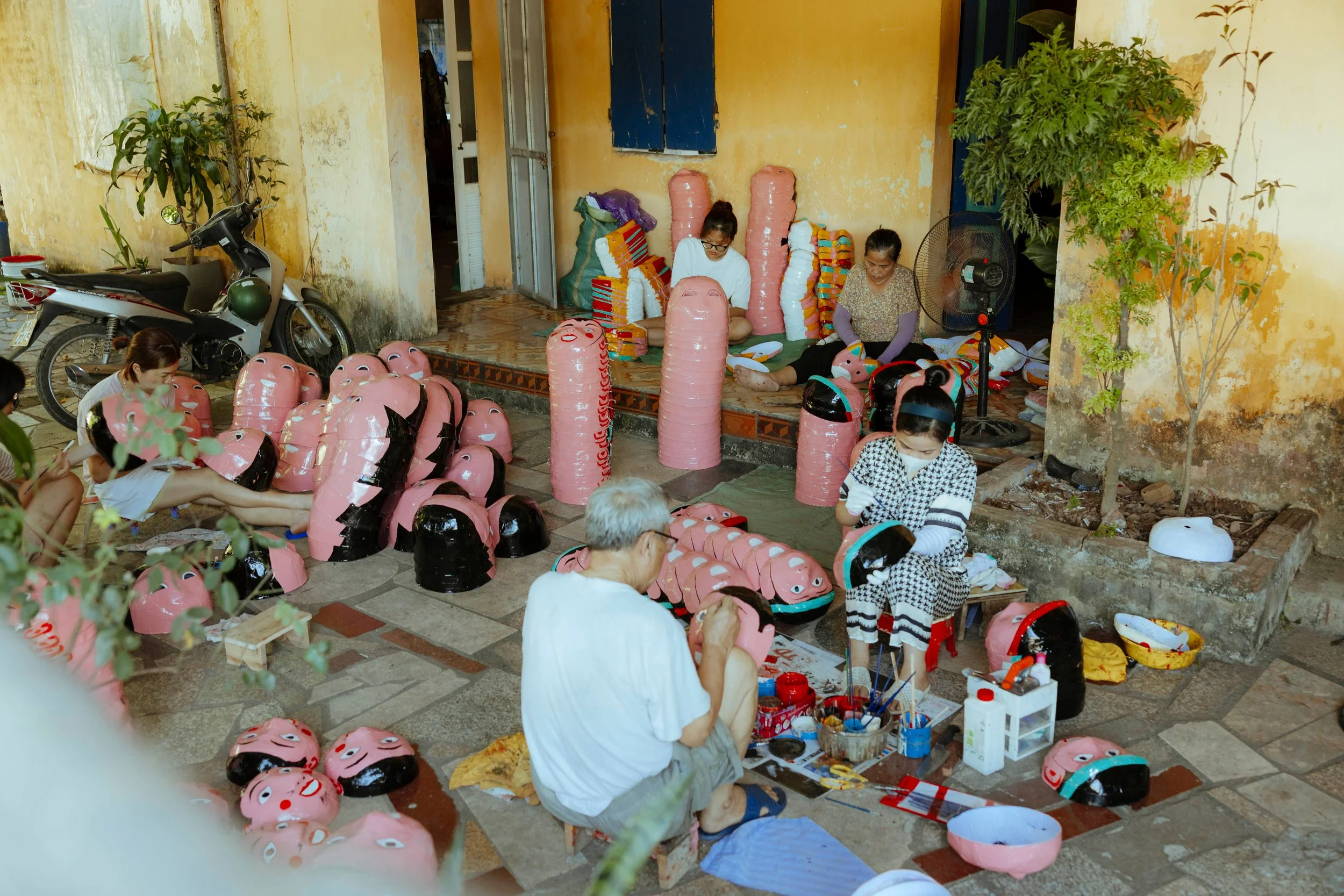
There is a quiet rhythm inside the workshop.
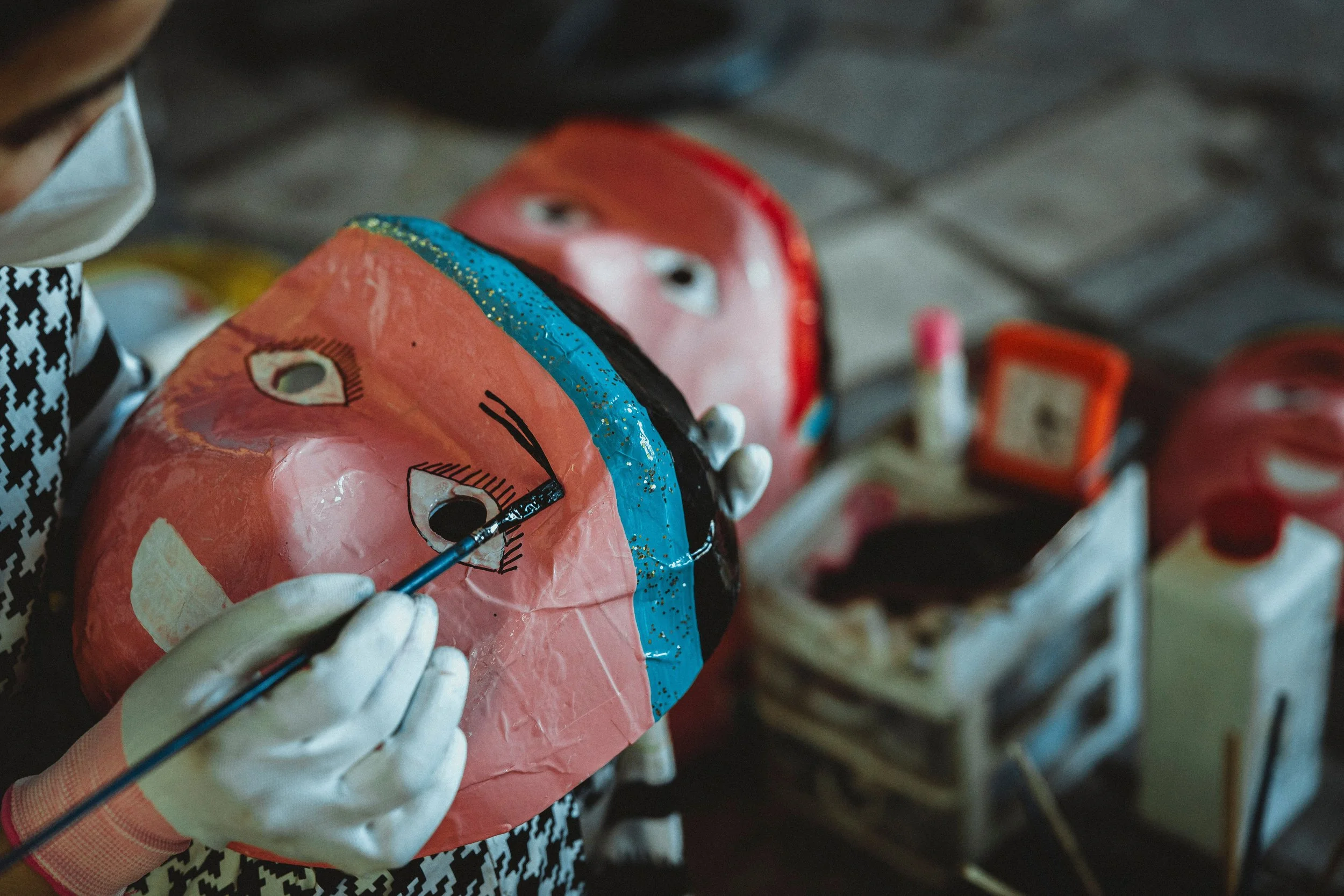
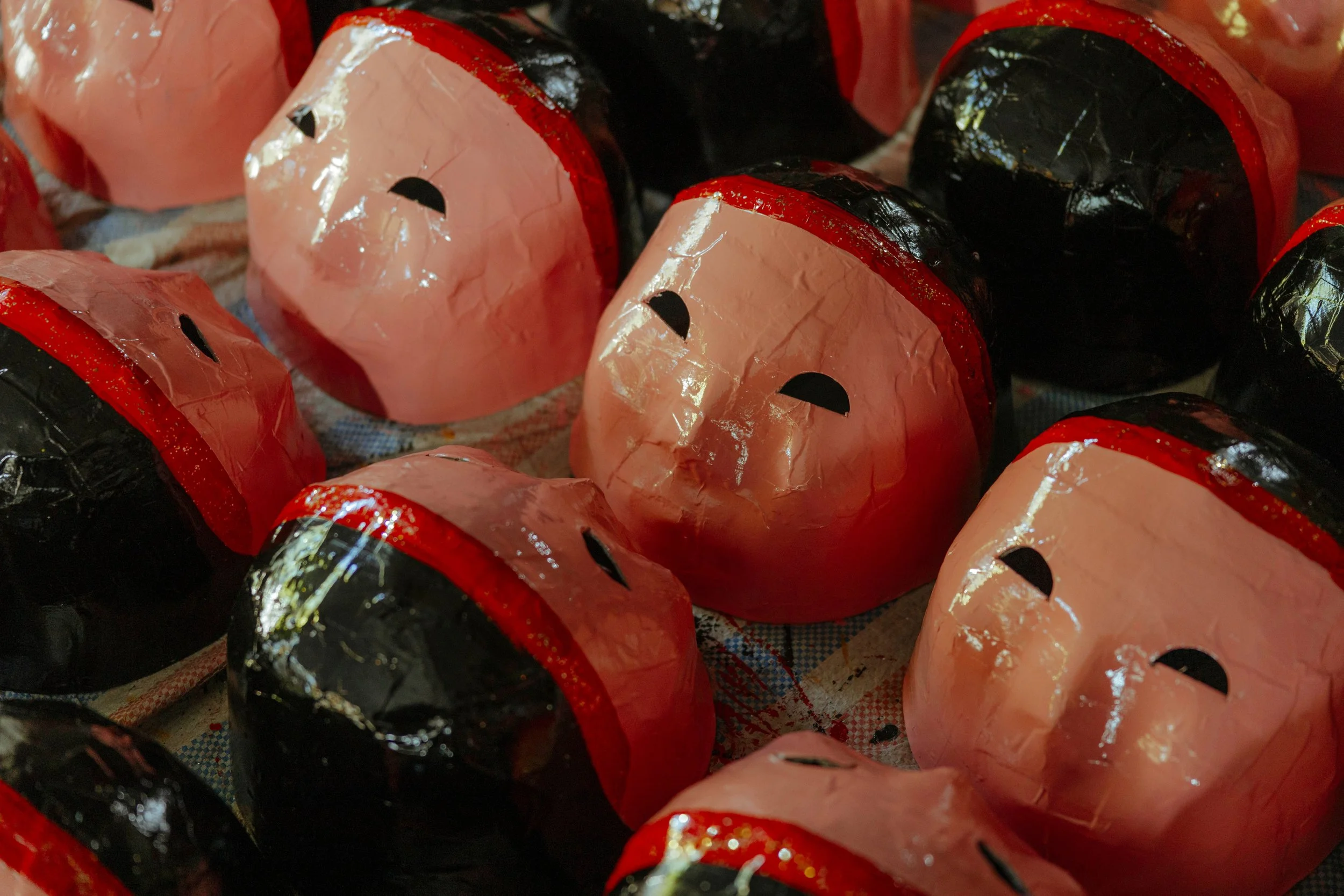
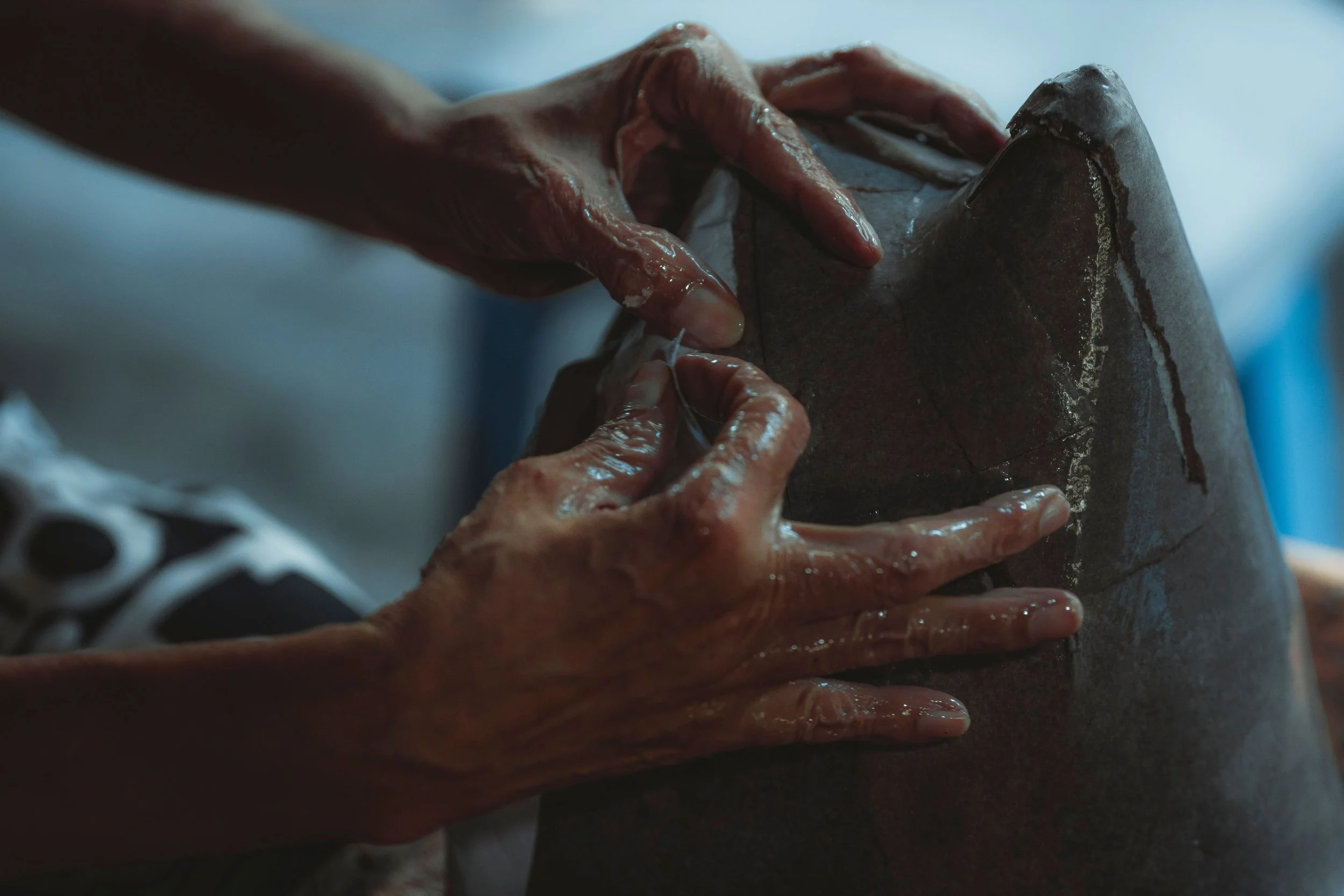
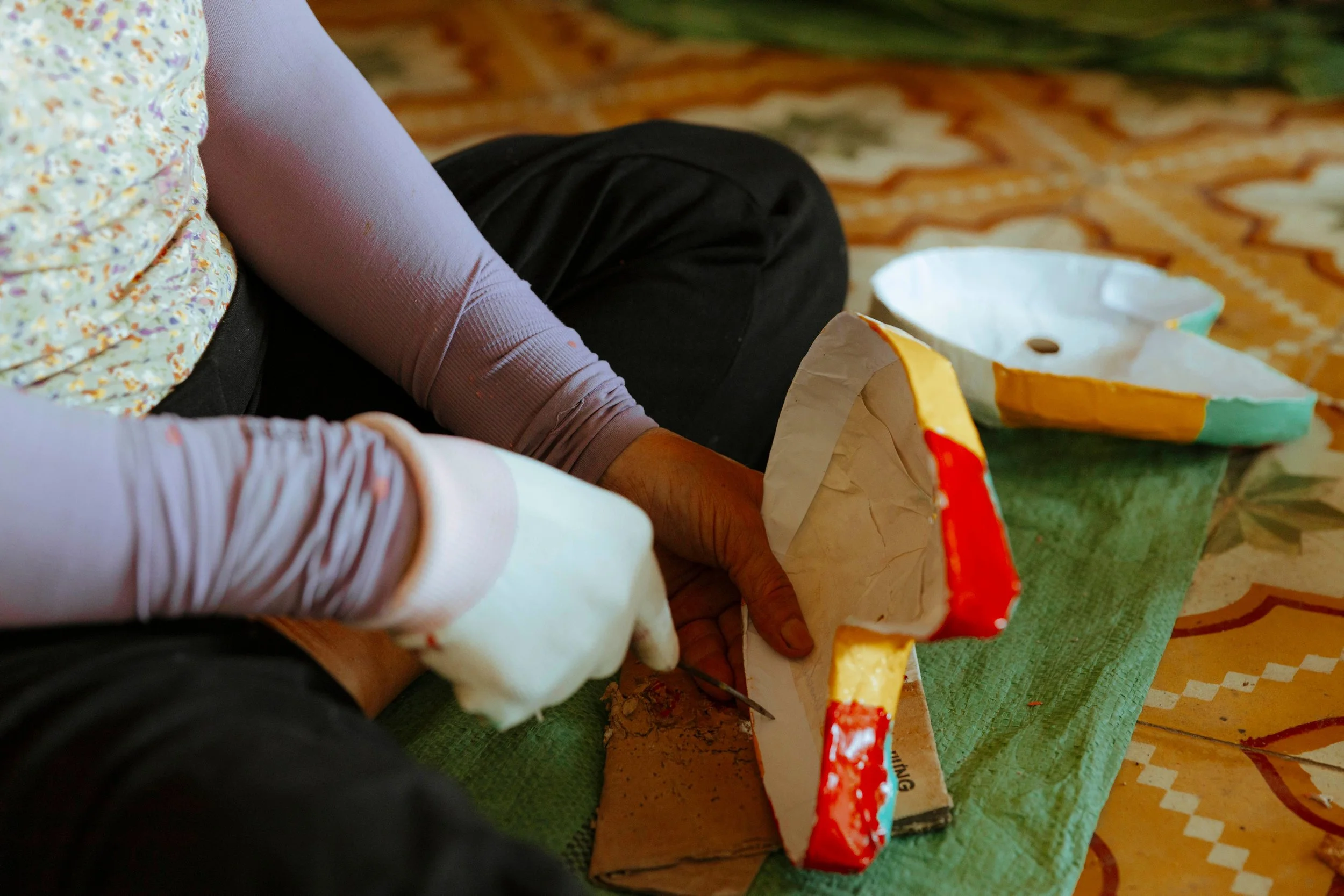
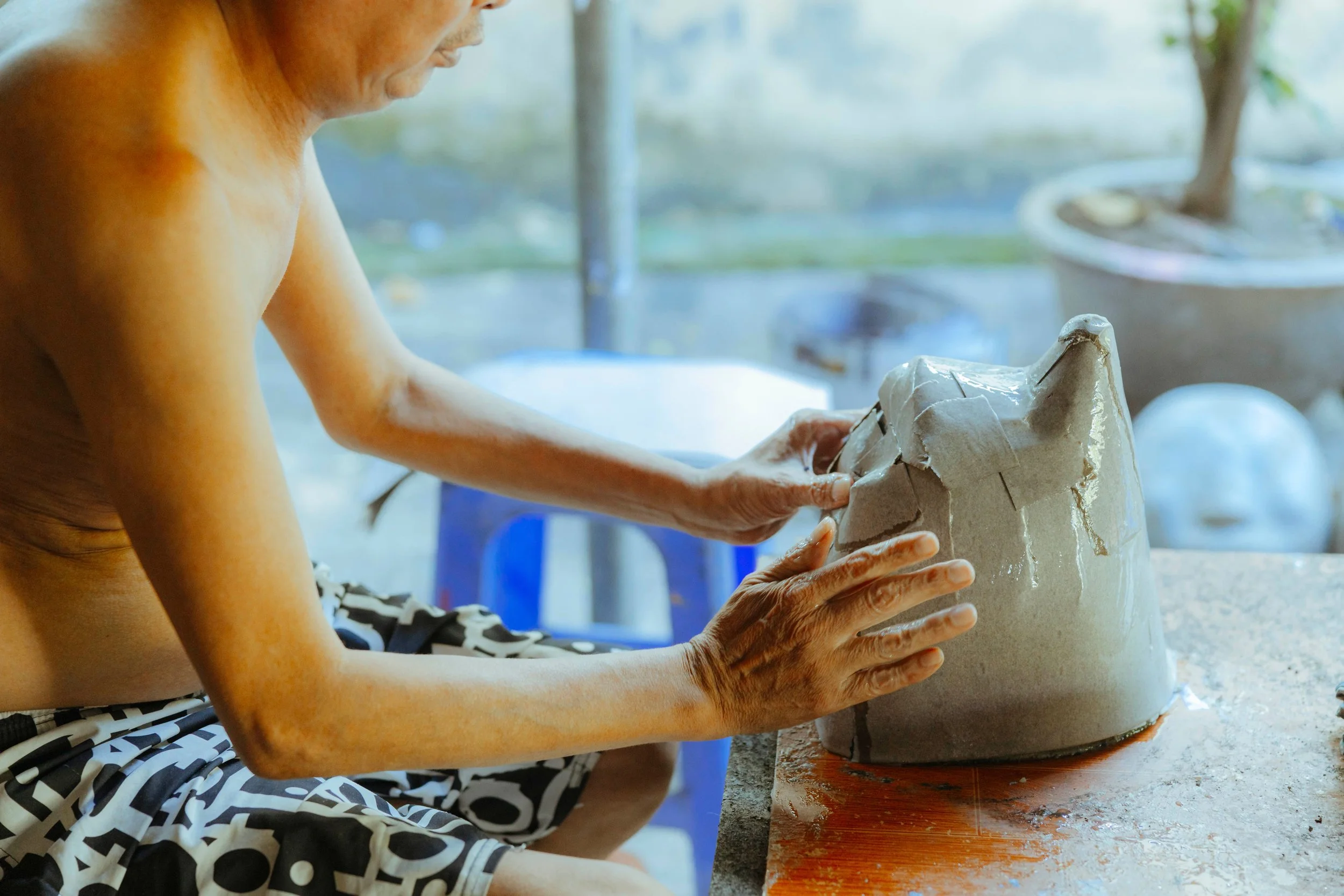
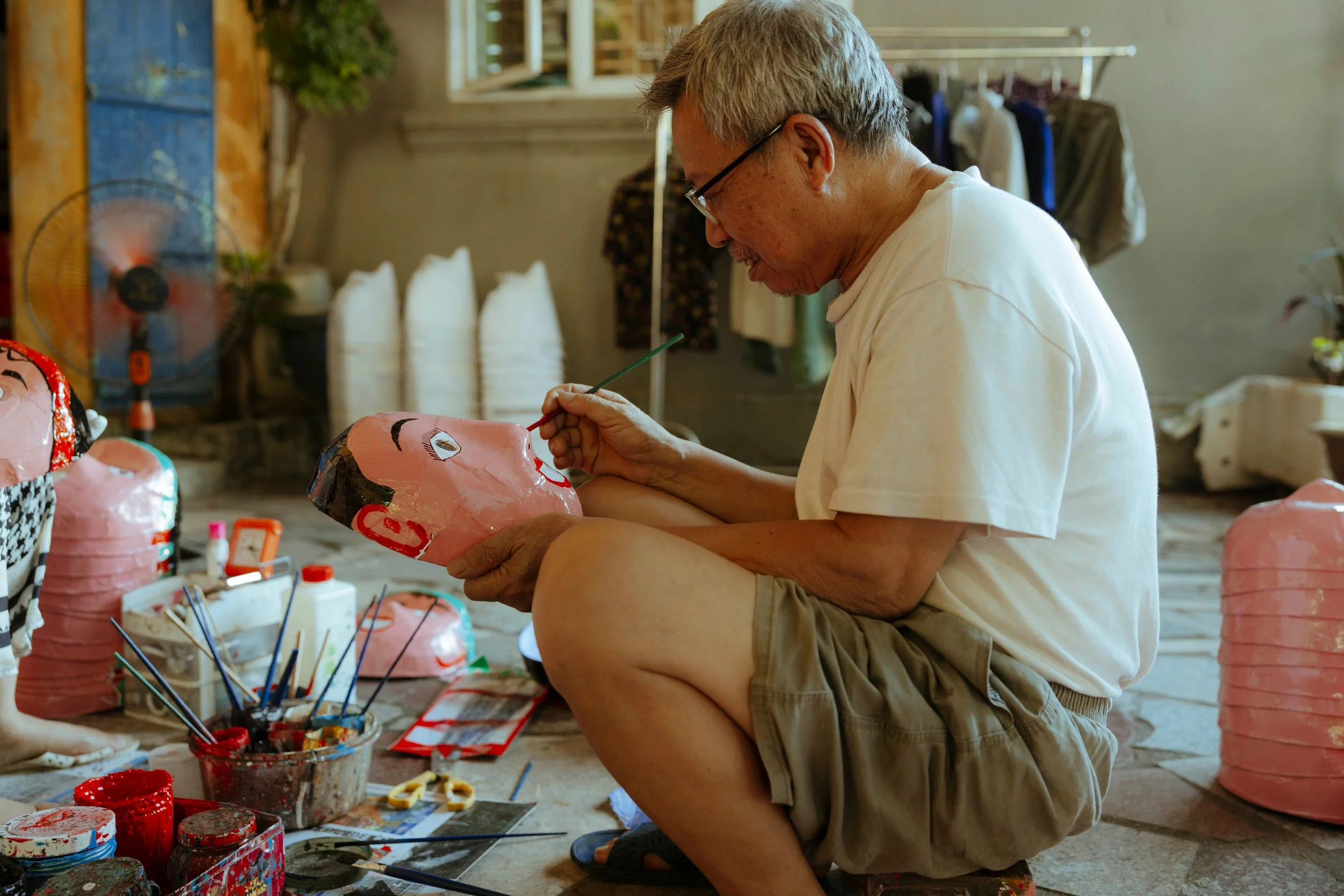
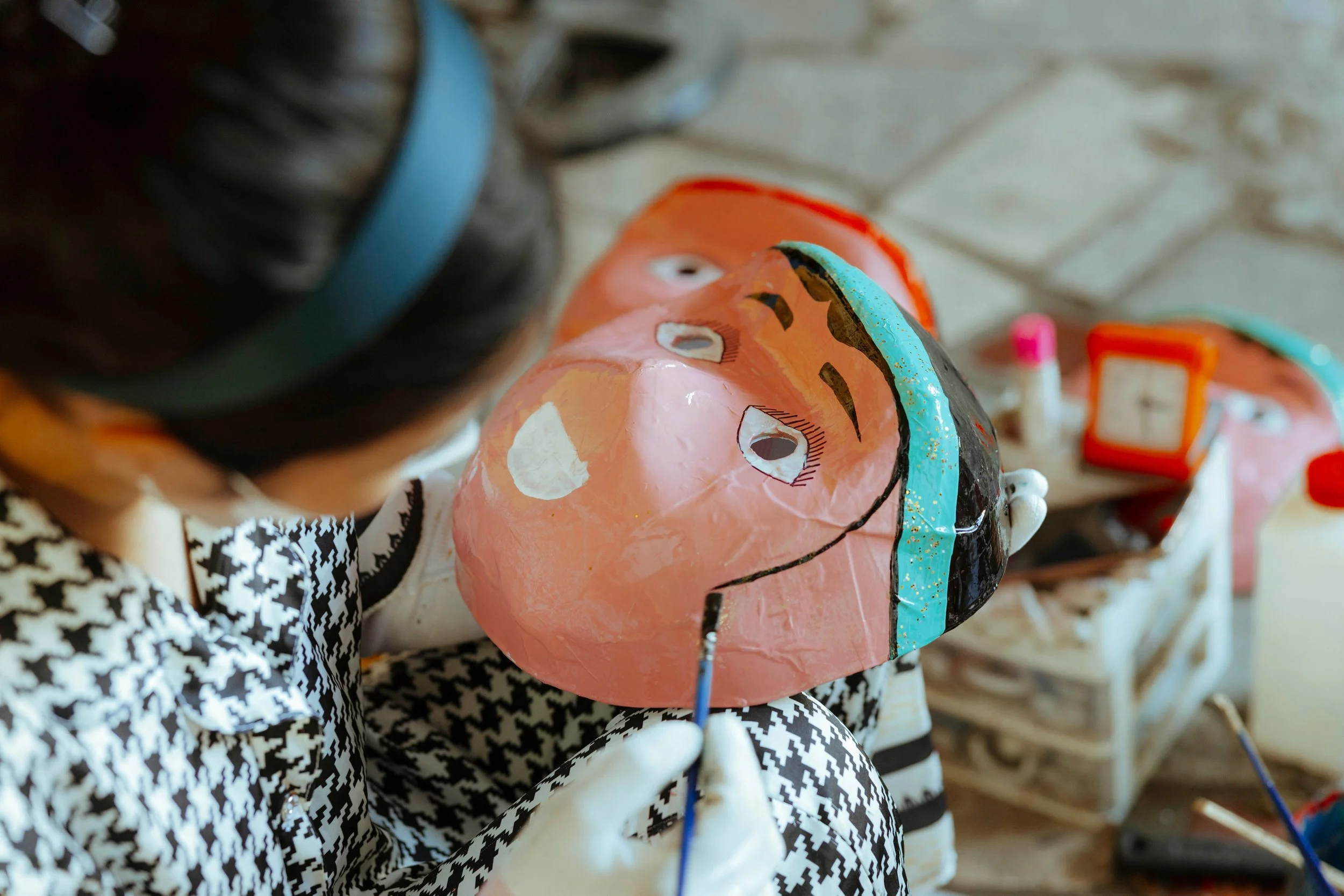
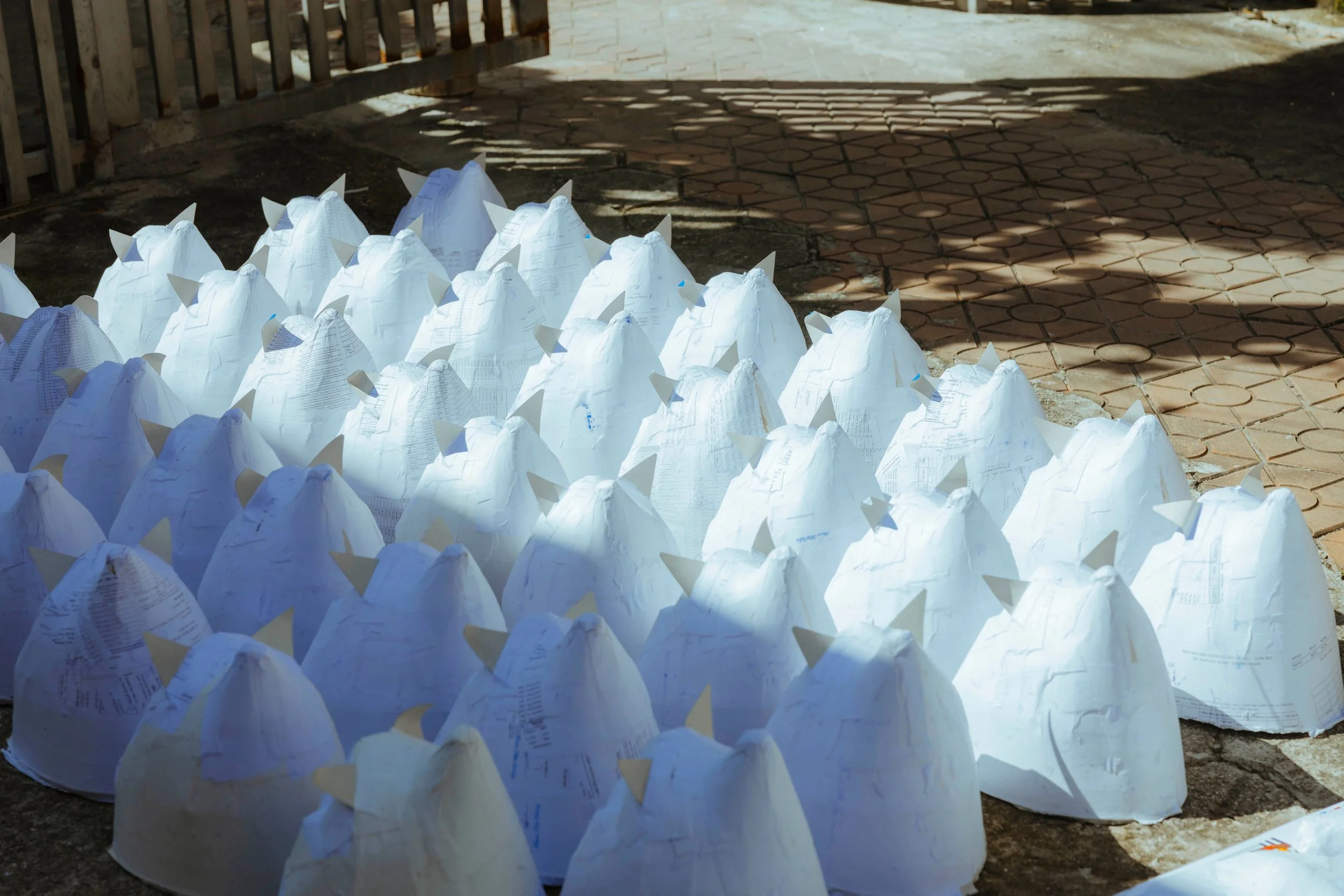
Long before the first brushstroke of pink, black, or red touches the surface, the masks begin as little more than sheets of paper, simple molds, and patient hands. One artisan carefully presses layers of paper into a weathered mold that has likely been used thousands of times before. Nearby, another sands yesterday's work until every curve is smooth enough to receive paint. Across the room, familiar smiles slowly emerge as each face is brought to life by hand.
Nothing feels rushed.
There are no assembly lines or automated machines. Only generations of knowledge passed from one pair of hands to the next.
Watching this process, it becomes clear that these are more than festival decorations.
They are pieces of living heritage.
For many Vietnamese people, mặt nạ giấy bồi, Vietnam's traditional papier mâché masks, are inseparable from childhood memories of Tết Trung Thu, the Mid Autumn Festival. They recall lantern-lit evenings, lion dances echoing through neighborhood streets, the scent of mooncakes, and the excitement of choosing a mask before joining friends outside.
Yet behind every painted smile lies a centuries-old craft that tells a much deeper story about Vietnamese identity, community, and the importance of preserving traditions in a rapidly changing world.
A Tradition Rooted in Community
The exact origins of mặt nạ giấy bồi are difficult to pinpoint, but historians trace the craft back several centuries, with strong connections to Vietnam's village festivals and the development of the Mid Autumn Festival during the Nguyễn Dynasty. While similar papier mâché traditions exist across Asia, Vietnam developed its own distinctive style, creating expressive characters inspired by folklore, theatre, and everyday life.
Unlike decorative souvenirs produced for display, these masks were always meant to be worn.
Children became storytellers.
Villages became stages.
Festivals became living performances where imagination blurred with tradition.
Each year, as the Mid Autumn moon approached its fullest, streets across Vietnam would come alive with lion dances, drums, lantern processions, and children wearing brightly painted masks. Entire neighborhoods gathered to celebrate together, reinforcing a sense of community that extended far beyond individual families.
The masks themselves became symbols of participation rather than observation.
You didn't simply watch the festival.
You became part of it.
More Than a Child's Toy
To many visitors, these masks may appear playful or whimsical. Their exaggerated expressions, bright colours, and familiar faces seem designed purely for entertainment.
But their significance runs much deeper.
Many traditional designs represent well known characters from Vietnamese folklore, including Chú Tễu, the cheerful village boy associated with traditional water puppetry, Ông Địa, the joyful earth spirit often seen dancing alongside the lion during festivals, and various animals representing prosperity, courage, wisdom, or happiness.
Each face tells a story.
Some encourage laughter.
Others celebrate resilience.
Some simply remind children that festivals are moments of shared joy.
Anthropologists often describe traditional festival objects like these as cultural artefacts of participation. Rather than preserving culture inside museums, they allow traditions to be lived, performed, and passed between generations through everyday celebration.
Perhaps that is why these masks continue to evoke such powerful memories.
They were never simply objects.
They were experiences.
Every Layer Carries a Story
The Vietnamese word giấy bồi refers to the process of layering paper together to create strength.
Traditionally, artisans used handmade papers such as giấy dó, applying multiple layers with natural adhesives before allowing each mask to dry beneath the sun. Once hardened, every surface was sanded by hand before receiving its final coat of paint.
Although some modern workshops now use different materials to improve durability, the essence of the process remains remarkably unchanged.
Watching artisans work, the pace feels almost meditative.
One person prepares fresh layers.
Another smooths yesterday's work.
Someone else patiently paints each eyebrow, smile, and expression with astonishing consistency.
No two masks are completely identical.
Each carries subtle variations that reveal the human hand behind its creation.
In a world increasingly dominated by mass production, these imperfections become part of the craft's beauty.
They remind us that heritage is never manufactured.
It is made.
Slowly.
Patiently.
Together.
Childhood Woven Into Memory
Ask almost any Vietnamese adult about Trung Thu, and their memories rarely begin with mooncakes.
They begin with neighbourhood streets.
Lanterns glowing after sunset.
Drums echoing through narrow alleyways.
Parents holding children's hands.
Friends laughing together beneath the autumn moon.
And somewhere among those memories is often a paper mask.
Objects like these have a remarkable ability to preserve emotion.
Psychologists studying autobiographical memory have found that familiar sensory objects, whether a smell, a piece of music, or something held during childhood, can trigger vivid recollections decades later. They become anchors for identity, connecting people to specific places, relationships, and moments in time.
Perhaps that is why these masks continue to resonate long after childhood.
They remind people not only of a festival, but of a feeling.
A feeling of belonging.
What These Masks Mean for the Vietnamese Diaspora
For many members of the Vietnamese diaspora, mặt nạ giấy bồi occupy a different place in memory.
Some remember wearing them during visits to Vietnam.
Others know them only through old family photographs.
Many younger generations have never seen one outside a museum or social media post.
As communities become more geographically dispersed, cultural traditions inevitably evolve. Festivals are adapted to new countries, languages shift across generations, and certain customs become increasingly difficult to maintain.
Yet heritage often survives through surprisingly ordinary objects.
A family recipe.
A lantern.
A photograph.
A paper mask.
These objects become bridges between generations.
They offer children born thousands of kilometres from Vietnam a tangible connection to traditions that might otherwise exist only as stories.
For the diaspora, reconnecting with culture does not always begin with language or history books.
Sometimes it begins with curiosity.
With asking why these masks were made.
Who painted them.
Who wore them.
And why they mattered.
Those questions often lead to something much larger than the object itself.
They lead us back to family.
Community.
Identity.
A Craft Slowly Disappearing
Despite their cultural significance, traditional paper mask workshops have become increasingly rare.
Plastic character masks, imported products, and changing consumer habits have dramatically reduced demand for handmade masks. Many younger artisans have chosen different careers, while aging craftspeople continue working without apprentices to inherit their knowledge.
This challenge reflects a broader global concern.
According to UNESCO, traditional craftsmanship is one of the most vulnerable forms of intangible cultural heritage. While handmade objects can be preserved, the skills, techniques, and cultural knowledge required to create them often disappear when they are no longer passed between generations.
What disappears is not simply a craft.
It is a way of seeing the world.
A relationship between people, materials, and memory that cannot be replicated by machines.
Every workshop that closes represents more than the loss of a business.
It represents the disappearance of stories that have survived for centuries.
Why Preservation Matters
Preserving traditional crafts is not about resisting change.
Culture has always evolved.
New materials emerge.
Festivals change.
Communities grow.
What matters is ensuring that the knowledge behind these traditions continues to be shared.
When we visited this workshop, what stayed with us was not simply the beauty of the finished masks.
It was the quiet dedication of the artisans themselves.
The careful repetition.
The patience.
The understanding that every mask might become part of someone else's childhood memory.
That responsibility carries remarkable weight.
It reminds us that heritage is not preserved by governments alone.
It survives because ordinary people continue choosing to practise, teach, and value it.
The Art of Slowing Down
At Third Culture Vietnam, this is why we believe culture cannot be fully understood from behind glass.
Museums play an essential role in preserving history, but living traditions are best understood by spending time with the people who continue to practise them.
By watching.
Listening.
Participating.
Asking questions.
Sharing stories.
Our Heritage Experiences are built around this philosophy.
Rather than simply showing places, we hope to introduce people to the individuals who continue carrying Vietnam's traditions forward every single day.
Because culture is not something frozen in the past.
It is alive.
It exists in workshops like this one.
In family kitchens.
On village streets.
Around festival tables.
And in the hands of artisans who quietly continue creating beauty long after the crowds have gone home.
More Than Paper
Perhaps that is the true lesson of mặt nạ giấy bồi.
They begin as fragile sheets of paper.
Layer by layer, they become something strong enough to last.
In many ways, culture works the same way.
It is built gradually through stories, traditions, celebrations, and shared experiences passed from one generation to the next.
For those of us living within or beyond Vietnam, these masks remind us that heritage is not only something we inherit.
It is something we choose to carry forward.
Every festival we celebrate.
Every story we tell.
Every tradition we continue.
Every conversation we have with the generations before and after us.
Like the artisans who patiently shape each layer by hand, we all play a small role in preserving what comes next.
And perhaps that is the greatest work of art of all.
References
UNESCO. Traditional Craftsmanship and Intangible Cultural Heritage.
Vietnam National Institute of Culture and Arts Studies (VICAS). Research on Vietnamese folk arts and traditional festivals.
Vietnam National Museum of History. Collections and historical documentation relating to Mid Autumn Festival traditions.
Nguyễn Thị Hậu. Research on Vietnamese folk culture and community festivals.
Bartlett, F. C. Remembering: A Study in Experimental and Social Psychology. Cambridge University Press.
Conway, M. A., & Pleydell Pearce, C. W. Research on autobiographical memory and cultural identity.
UN Tourism. Reports on safeguarding cultural heritage through sustainable tourism.
Experience These Stories for Yourself
This November, our Heritage Experience invites members of the Vietnamese diaspora and curious travelers to discover a different side of Vietnam, one shaped not only by places, but by the people who continue to keep its traditions alive.
Throughout our journey, we'll spend time with local artisans, families, historians, and community members whose stories rarely appear in guidebooks. Together, we'll learn through conversation, shared meals, hands-on workshops, and experiences like visiting traditional mặt nạ giấy bồi makers, where heritage is not simply preserved behind glass, but practiced every day.
These moments are at the heart of what we believe travel can be.
Not a checklist of attractions.
But an opportunity to slow down, ask questions, build relationships, and better understand the culture through the people who live it.
If you're searching for a more meaningful way to reconnect with Vietnam, we would love to welcome you.
Our next Heritage Experience takes place November 2 to 15, 2026.
Explore the itinerary, meet our community, and learn more about our upcoming journeys on our website.